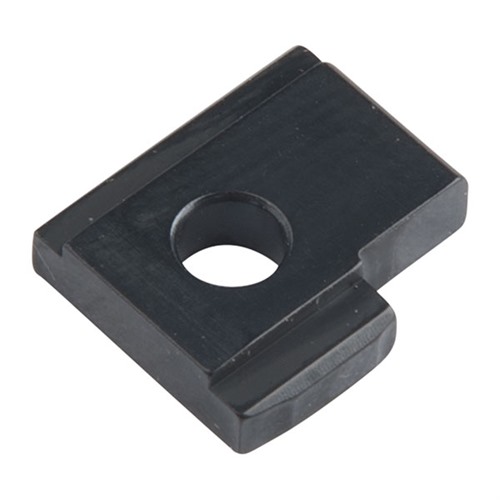
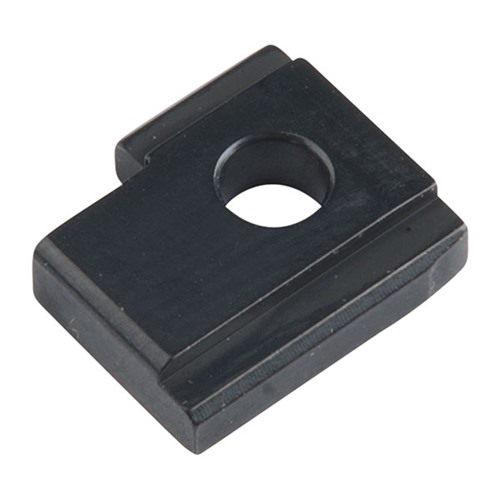
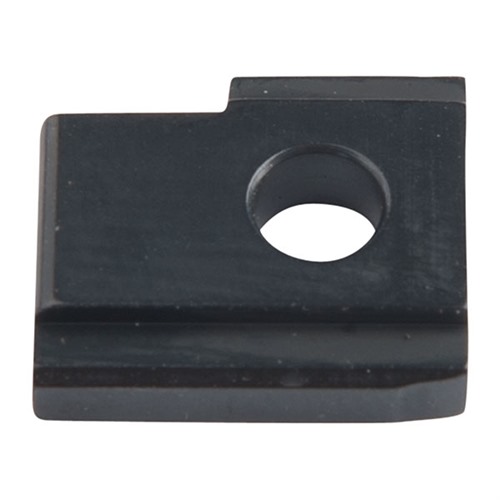
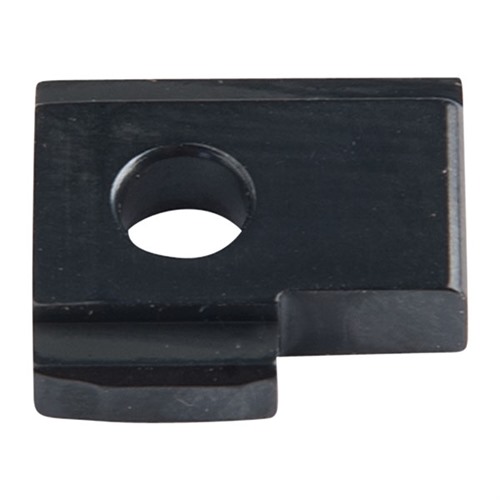
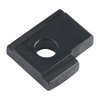
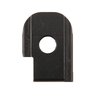
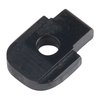
Highly recommended for both heavy recoiling 1911s and also 1911s with shorter than Gov't Model slides. The Extreme Service firing pin stop is CNC machined out of an oil-quenching tool steel that was chosen for a balance of impact and wear resistance, with a GI hardness is 44-50Rc. The Extreme Service FPS is made .482" wide so it can be fitted to your slide and extractor to prevent extractor "clocking". It has chamfered fitting pads on each side to make your job easier and the FPS fit better into the slide. It has a 3/64" radius machined on the bottom rear corner and a 3 degree angle at the top rear face, both of which act to take away mechanical advantage from the slide when it's cocking the hammer, by moving the contact point to the bottom of the hammer face. This will retard the initial movement of the slide, slowing its rearward speed a little. This will allow short length 1911s to have less imbalance between the slide's speed and the magazine spring's force on the last couple of rounds, reducing the bolt over base type of malfunctions caused by the slide outrunning the magazine spring.
¡Mejora tu 1911 con el Firing Pin Stop Extreme Service!
El Firing Pin Stop Extreme Service 1911 de Harrison Design & Consulting es altamente recomendado tanto para 1911s de retroceso fuerte como para aquellos con deslizadores más cortos que el modelo gubernamental.
Descripción del Producto
El Extreme Service firing pin stop está mecanizado CNC de un acero de herramienta tratado con aceite, elegido por su equilibrio entre resistencia al impacto y al desgaste, con una dureza GI de 44-50Rc. Este FPS tiene un ancho de .482" para que puedas ajustarlo a tu deslizador y extractor, evitando así el "clocking" del extractor.
Además, cuenta con almohadillas de ajuste biseladas a cada lado que facilitan tu trabajo y mejoran el ajuste del FPS en el deslizador. Tiene un radio de 3/64" mecanizado en la esquina trasera inferior y un ángulo de 3 grados en la cara trasera superior, ambos diseñados para reducir la ventaja mecánica del deslizador al percutir el martillo, moviendo el punto de contacto hacia la parte inferior de la cara del martillo.
Esto retardará el movimiento inicial del deslizador, disminuyendo un poco su velocidad hacia atrás. Como resultado, los 1911s de longitud corta tendrán menos desbalance entre la velocidad del deslizador y la fuerza del resorte del cargador en los últimos disparos, reduciendo así los malfuncionamientos del tipo "bolt over base" causados por el deslizador superando al resorte del cargador.
 Ayuda y contacto







 Vista clásica
 Vista móvil
